Packaging has transitioned from being just a container that stores products. It now functions as a storage, a branding surface, and a logistic tool—all in one. For businesses that need packaging options that combine these functions efficiently, the paper tube container has emerged as a highly versatile choice.
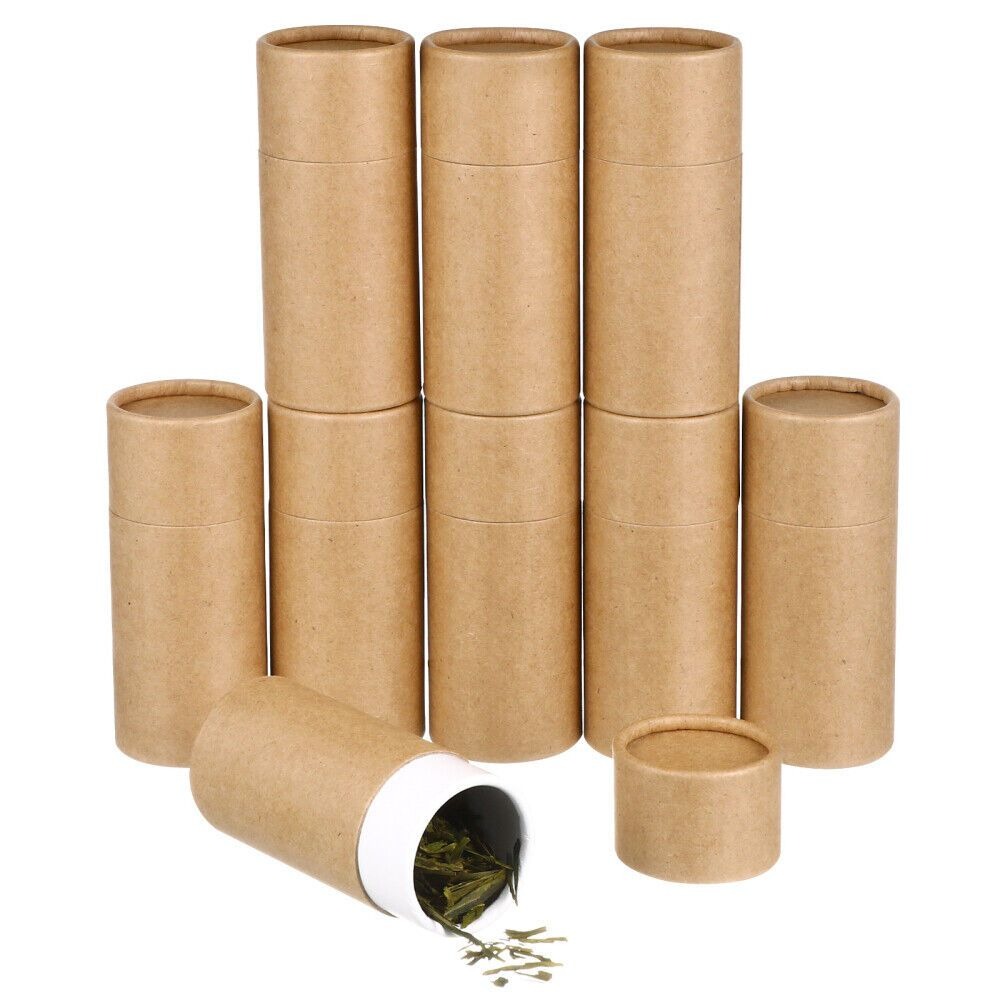
Paper tube packaging are basically cylindrical containers made from thick paperboard, and are designed to look neat, protect products well, and be eco-friendly. They were once only associated with posters and mailing documents, but now, they are used across several industries, such as cosmetics, candles, apparel, and specialty foods.
This article explains everything you need to know about the cylinder paper tube packaging and how to implement it efficiently into your business.
What is Paper Tube Packaging Good At?
Paper tube packaging excels in various functional and marketing dimensions, such as:
- Structural Protection: Paper tubes are cylindrical, which causes them to distribute pressure evenly. Unlike rectangular cartons that may lose their structure at corners, paper tubes resist crushing from any direction. This makes them good for fragile or odd-shaped items like glass bottles and cosmetics.
- Premium Shelf Presence: When you walk into a retail shop, you will notice that the shelves are mostly filled with square or rectangular boxes, which are not so special anymore. But paper tubes have a cylindrical geometry, which makes them stand out and quickly noticed by customers. They serve as a premium packaging design that signals luxury and top quality.
- Sustainability: Corrugated paper tube containers are made from paperboard and can be recycled after use. This makes them a go-to option for customers who are environmentally conscious. Some customers often keep the packaging for future storage or decoration. This extends your brand exposure.
- Lightweight Shipping: A paper tube container is relatively light, meaning their overall (even when they contain products) is less compared with other packaging. The reduced weight translates directly into lower shipping costs, particularly when the shipping fee is calculated based on dimensional weight.
- Versatility in Finishing: Paper tubes are compatible with a wide range of finishes, such as matte lamination, gloss coating, foil stamping, embossing, soft-touch coating, and textured wraps. This allows you to achieve highly customized aesthetics without changing your design format.
Paper Tube Packaging Types
There are various types of the cylindrical paper tube box, and each of them serve different purposes. They include:
Telescoping Tubes
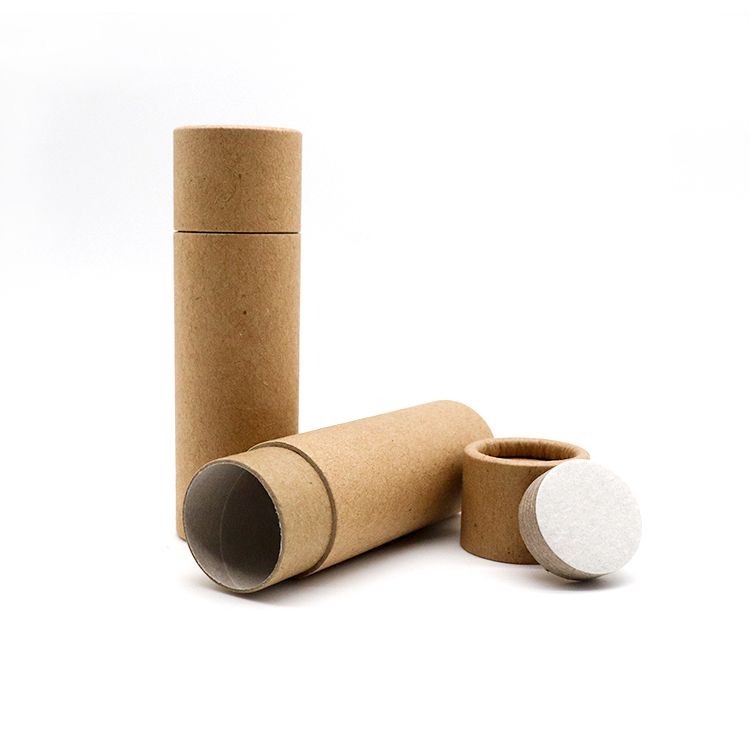
These types are made of two parts: a base and a lid that slides over. They are commonly used for packaging premium products, such as candles and apparel. Telescoping tubes offer a refined unboxing experience and extra protection, especially because the lid overlaps the body.
Mailing Tubes
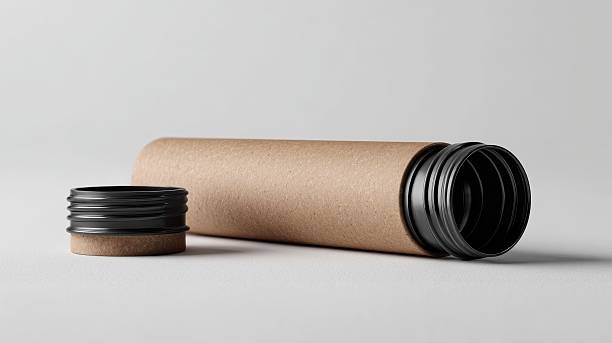
They are not entirely made of paper tubes. While the body is made of paper tubes, the caps at each end can be made with plastic, metal, or thick cardboard. The main priority here is durability rather than luxury presentation. They are widely used for shipping posters, documents, and artwork.
Crimped-end Tubes
For this type, one or both ends of the packaging are folded inward and sealed. They are frequently used for one-time purposes or tamper-proof packaging, such as snack powders or small hardware parts.

Composite Tubes
These types have extra layers (foils or plastic lining) inside the paperboard to protect against moisture or oxygen. They are commonly used for packaging food like powdered drinks, spices, and snacks, so the inner lining prevents contact with moisture or air.
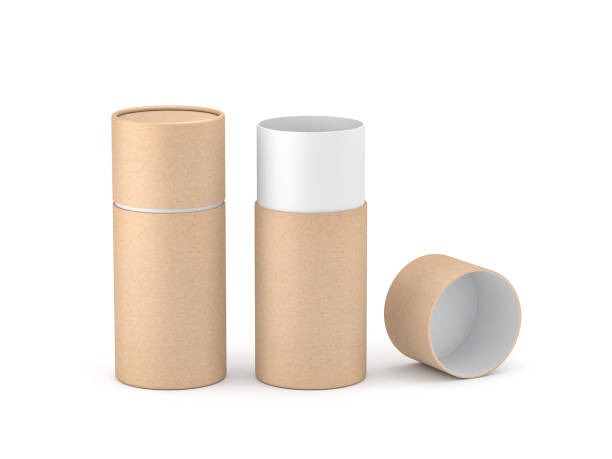
Spiral-wound vs Convolute-wound
This classification has to do with the manufacturing technique:
- Spiral-wound: These are paper tube containers that have their paperboards wrapped diagonally. They are more economical and stronger.
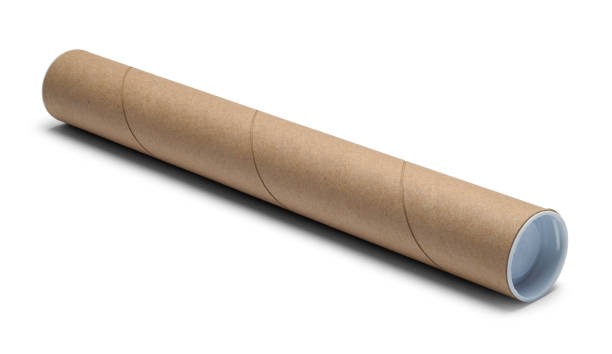
- Convolute-wound: These are paper tube containers that have their paperboards wrapped straight across. They have a smoother exterior for high-end print.

What Products are Most Suitable for Paper Tube Packaging?
Paper tube packaging works best for certain products. The easiest way to know if your product fits into this category is to check their shape, weight, and presentation requirements.
Product Shapes
Paper tube packaging is suitable for items that are rolled or cylindrical. If your product naturally fits into the tube shape, packing will be fast and simple.
Product Weights
Paper tubes are strong but are not designed for very heavy items. They work best for light to medium-weight goods.
Products That Need Presentation
If your product is meant to look premium, tubes are a great choice. An example is an artist that needs to package his rolled artwork.
Common Product Examples are:
- Cosmetics and Skincare: Lip balms, serums, creams, and perfumes often use tubes because they give an eco-luxury feel.
- Candles: Paper tube candle packaging acts as a protector against impact during transit or storage.
- Apparel Accessories: Socks, ties, scarves, and T-shirts can be rolled and inserted easily into paper tubes.
- Dry Foods and Powders: Tea, coffee, protein powder, and spices benefit from composite tubes with protective liners.
- Print Media: Posters, maps, and artwork are classic tube products because the shape naturally protects rolled paper.
Products That Are Not Suitable are:
- Very heavy items
- Products requiring flat stacking
- Extremely fragile items that need foam cushioning
- Irregularly shaped objects
Functional Considerations for the Supply Chain
Fine, paper tubes have a nice aesthetics but that should not be the only thing you consider when evaluating your product packaging. You have to consider every other aspect of the supply chain, such as the shipping durability, storage space, and assembly speed to determine whether it helps or hurts your operation.
Shipping Durability
Firstly, you need to decide if the paper tube itself will be the primary shipping container or it will be put into another box.
If it’s the primary shipping container (like a mailing tube), it must be tough enough to withstand drops, compression, and moisture. Also, it should have thick walls and strong caps.
On the other hand, if the tube will sit inside another shipping box (like retail packaging), it doesn’t necessarily need extreme toughness. It can have thinner walls and decorative finishes instead.
Storage Space
Unlike folding cartons boxes, paper tubes are not shipped flat. They arrive fully assembled, which means they occupy more warehouse space.
If you’re a small business owner with limited storage, this is a big factor you need to consider. While a hundred flat boxes may fit into one section, a hundred paper tubes might require three or four sections.
Assembly Speed
Another factor to evaluate is how quickly you can pack the products into the tubes, especially during high-volume periods. The packaging speed directly affects labor cost.
Products that slide in easily (like artworks and posters) can be easily packed, but fragile items (like glass cups) may need padding, which slows things down.
A good practice is to test packing time before committing to a packaging style. Set a timer and monitor how long it takes to pack 20 units. If it’s too slow, you need a different tube size or internal insert.
Cost Reduction Strategies for Small Businesses
Every small business has the same theory: as much as they want to offer quality, they want to reduce costs. Explained below are strategic ways to reduce your cost of making paper tube packaging:
The “Goldilocks” Measurement
The best tube size is: not too tight and not too loose. That is what the “Goldilocks measurement” is about. It basically has to do with designing and sizing containers so they are just right—not too large nor too small.
If a tube is too tight, you will struggle to insert the product, which slows packing. And if it’s too loose, the item will be moving around, meaning that you will need fillers like bubble wrap or tissue paper—extra cost and time wastage.
To find the perfect diameter for your product:
- Measure the widest part of the product
- Add a small, extra gap (about 3-8 mm)
- Make a sample and try to insert your product
For example, if the widest part of your product is 60 mm, you can add about 5 mm to make it easy to insert the product and make sure it fits perfectly.
Weight vs. Wall Thickness
Match the tube strength to your product weight. Many businesses sometimes go for very thick paper tubes just in case the product comes in contact with any damaging element (may be moisture or air). While this is great, they forget that thicker tubes mean higher weight, which translates to increased shipping costs.
Instead, use just the right tube strength for your product weight:
- Light-weight items (like socks or tea bags) – thin walls
- Medium-weight items (like candles or bottles) – standard walls
- Heavy-weight items (like skincare products) – thick walls
Think of it like choosing a backpack. You wouldn’t use a hiking backpack to carry a notebook. The same logic applies here.
Standardization
Using custom tube sizes often requires manufacturers to utilize special tools, which can be expensive, especially for small orders. Thus, it’s recommended that you choose industry standard measurements, such as 40 mm, 65 mm, or 80 mm, to avoid extra charges. These sizes are very common, so they are easier and cheaper to source as wholesale paper tube packaging.
As a small, growing business, you should only use custom tube sizes if your product cannot fit into the standard options. If that’s the case, consult a professional packaging manufacturer, explaining your exact needs and budget.
The “Blank Tube + Sticker” Hack
One of the smartest ways to save money is to separate sourcing the storage container from branding. Instead of ordering paper tubes with designs, buy plain tubes in bulk—they are cheaper. Then, buy quality stickers to brand them yourself.
This approach offers many advantages:
- Lower price per unit
- Faster production time
- Easy design changes
- No wasted packaging if there’s a tweak in branding
For example, if you rebrand your logo, you only need new stickers, not new tubes. On the other hand, you can contact an experienced printed box packaging manufacturer if you have special needs.
Efficiency Spotlight: The “One-Label” System
If you sell small items like jewelry, accessories, or mini cosmetics, packing speed matters a lot—particularly when you have many orders to meet. A simple trick to save time and be efficient at it is the One-Label System. What this means is that: instead of using separate stickers for branding, product information, and sealing, you use one long Tamper-Evident Seal that wraps from the tube lid down to the base.
This single label does 3 jobs at once:
- Branding: It shows your logo and design.
- Product Information: It includes the barcode, ingredients, and instructions/how-to-use.
- Security Seal: It shows the customer that the tube hasn’t been opened.
Normally, you’re supposed to apply three separate labels for these steps. But that takes time and increases the chances of mistakes, such as not placing a label properly or forgetting one entirely. With one long label, packing becomes faster and more consistent.
For example, imagine packing 500 orders a day. Instead of spending hours on attaching 3 labels per product, you can use just 3 seconds to apply a single label on each item, saving you a lot of time.
Key Takeaway
Paper tube container packaging is a strategic choice, not just a stylish one. It’s the go-to option when you want packaging with structural strength to protect your products, visual distinction to captivate customers, and eco-friendly peculiarity to attract environmentally-conscious consumers.
This packaging type works well for light to medium-weight products that fit well into cylindrical containers. To get the most value, choose the right size, avoid overly thick tubes, use standard industry options, and label the tubes yourself. When chosen carefully, paper tubes don’t just hold your product, they improve shipping, presentation, and workflow.